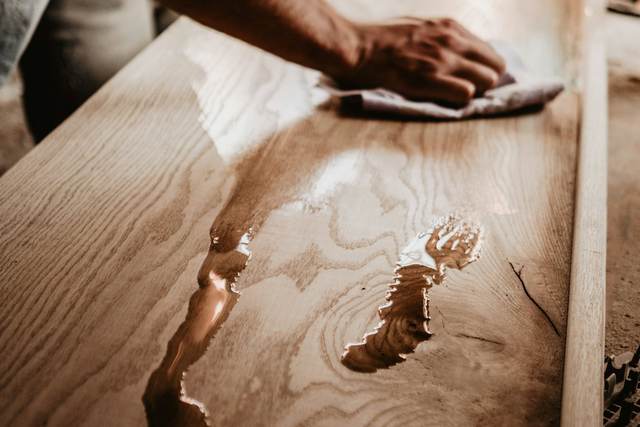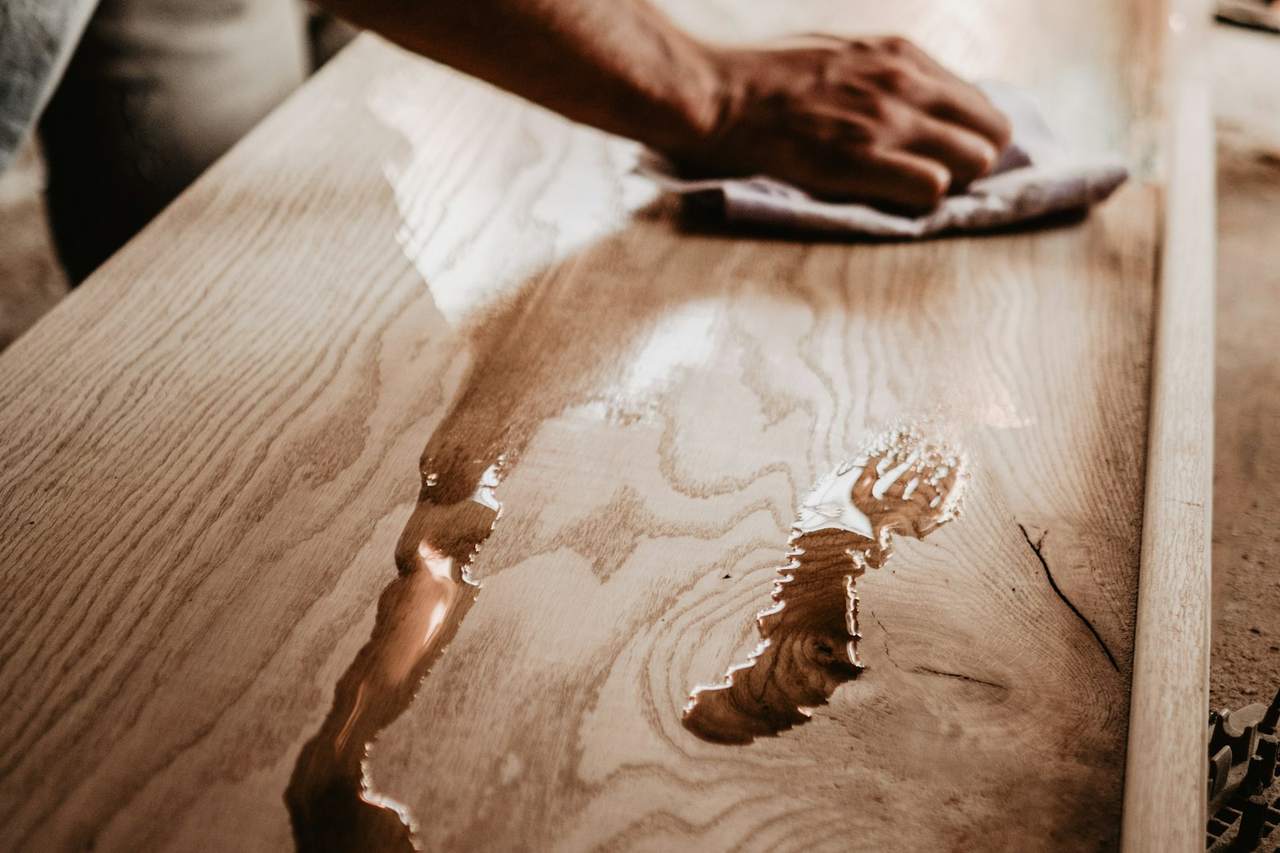
A stain should colour wood and still show its grain. The two main colouring routes behave very differently.
Dye stains
Dyes dissolve and penetrate the fibres, giving clear, bright and very transparent colour that highlights figure. They suit interior furniture and flooring under a protective lacquer, but their light fastness is limited, so they are not the first choice outdoors.
Transparent iron-oxide stains
Transparent oxides are very fine pigments that scatter little light, so they look transparent while giving the light fastness and weather resistance of iron oxides. They also absorb UV, which helps protect the wood beneath. They are the choice for exterior joinery, decking and cladding.
Practical points
- Test on the actual species: teak, sheesham and pine take colour very differently
- Sanding grit changes uptake; standardise it
- Check compatibility of the stain with the topcoat (NC, PU, acid-catalysed or water-based)
- Combine oxides and dyes when you need both brilliance and durability