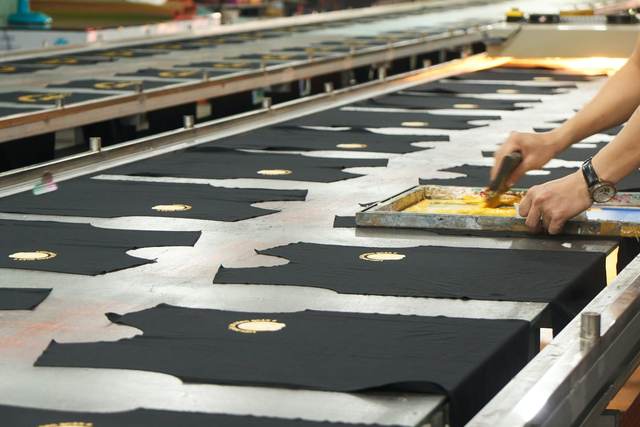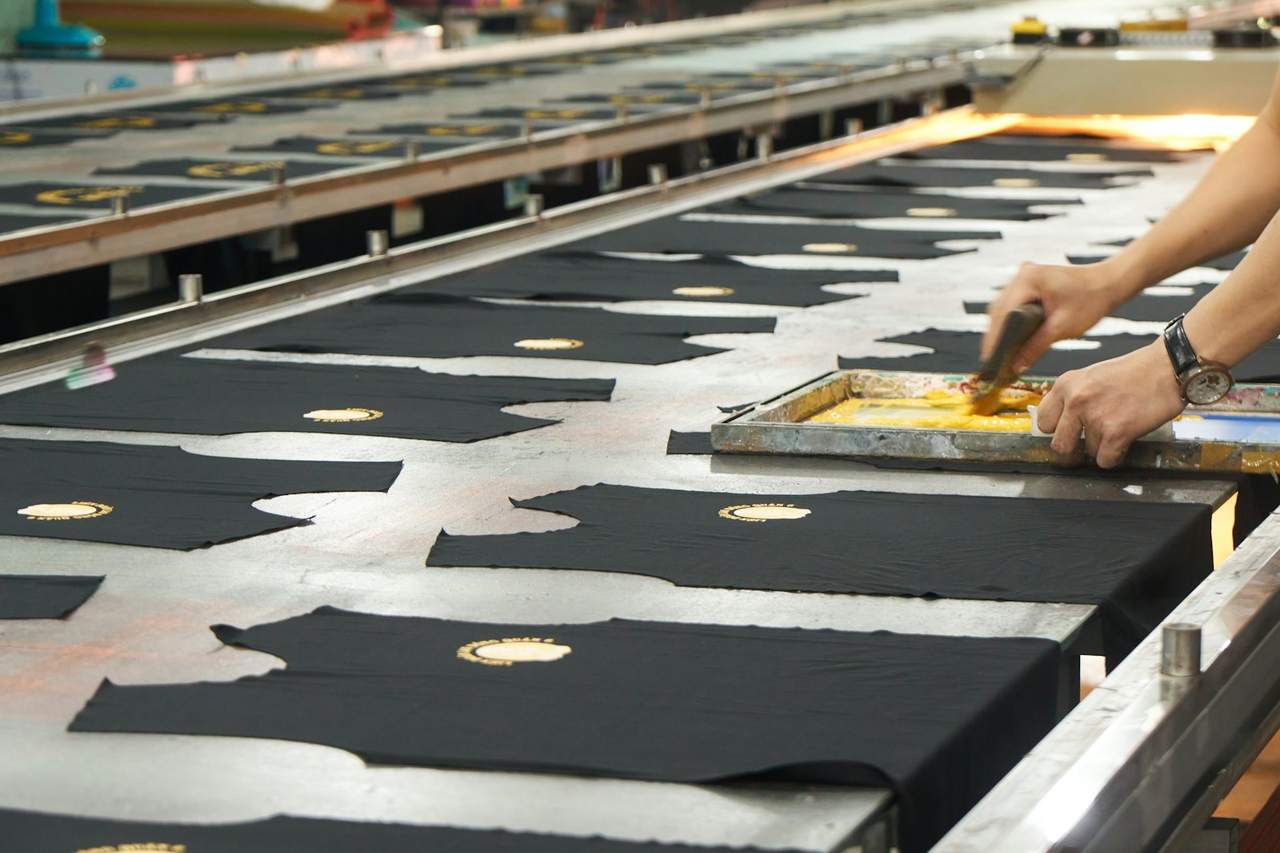
Pigment printing is the most widely used textile printing method because it works on almost any fibre and needs no washing after printing.
The print paste
A pigment print paste combines pigment dispersion, binder, thickener and auxiliaries. The pigment has no affinity for the fibre; the binder film holds it in place.
- Binder: self-crosslinking acrylic film; choose soft-handle types for apparel, and formaldehyde-free versions where required
- Thickener: synthetic thickeners give sharp outlines and correct viscosity for rotary or flat screens
- Fixer: improves wash and rub fastness
- Softener: improves handle of heavy prints
Curing
The binder crosslinks during curing, typically a few minutes at about 150 to 170 °C. Under-cured prints lose wash and rub fastness; check cure on the actual fabric.
Garment dyeing with pigments
Cationising the garment first lets anionic pigment dispersions exhaust onto the fabric, giving vintage, washed-out looks.