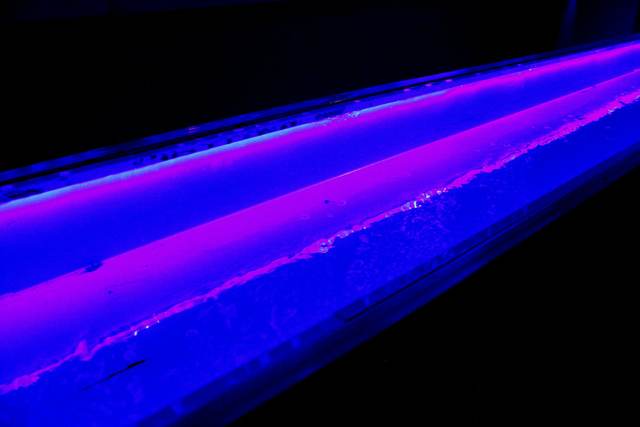
UV-LED lamps are replacing mercury lamps because they run cooler, switch instantly and contain no mercury. They emit in a narrow band, typically at 365, 385, 395 or 405 nm, so the photoinitiator package must change too.
Match absorption to the lamp
Many classic photoinitiators absorb mainly below 350 nm and do little under a 395 nm LED. Phosphine oxides (TPO-type and BAPO-type) and thioxanthones such as DETX absorb at longer wavelengths and form the core of most LED packages.
Surface cure
LEDs lack the short-wavelength UV that cures the very surface against oxygen inhibition. Higher-functionality monomers, amine synergists, inerting or a higher irradiance help achieve a tack-free surface.
Regulatory watch
Several photoinitiators have been reclassified, and some are restricted in certain uses. Check the current classification and the end use, especially for food packaging and toys, before fixing a package. Ask for the SDS and regulatory summary for each grade.